

There is no question that ketamine therapy has gained popularity for its promising results in treating depression, anxiety, and other mental health conditions. With its growing popularity, it’s no surprise that treatment options have expanded to adjust to patients’ needs. One of the developments we have been watching is the rise of online companies offering at-home ketamine treatments. While it might seem convenient, there are many risks of at-home ketamine treatments. It is important to understand how ketamine works, the effects of ketamine abuse, and the importance of receiving ketamine in a clinical setting.
Ketamine Treatment Options
There are many types of ketamine treatments available for mental health conditions. Each method comes with its own delivery method and supervision level.
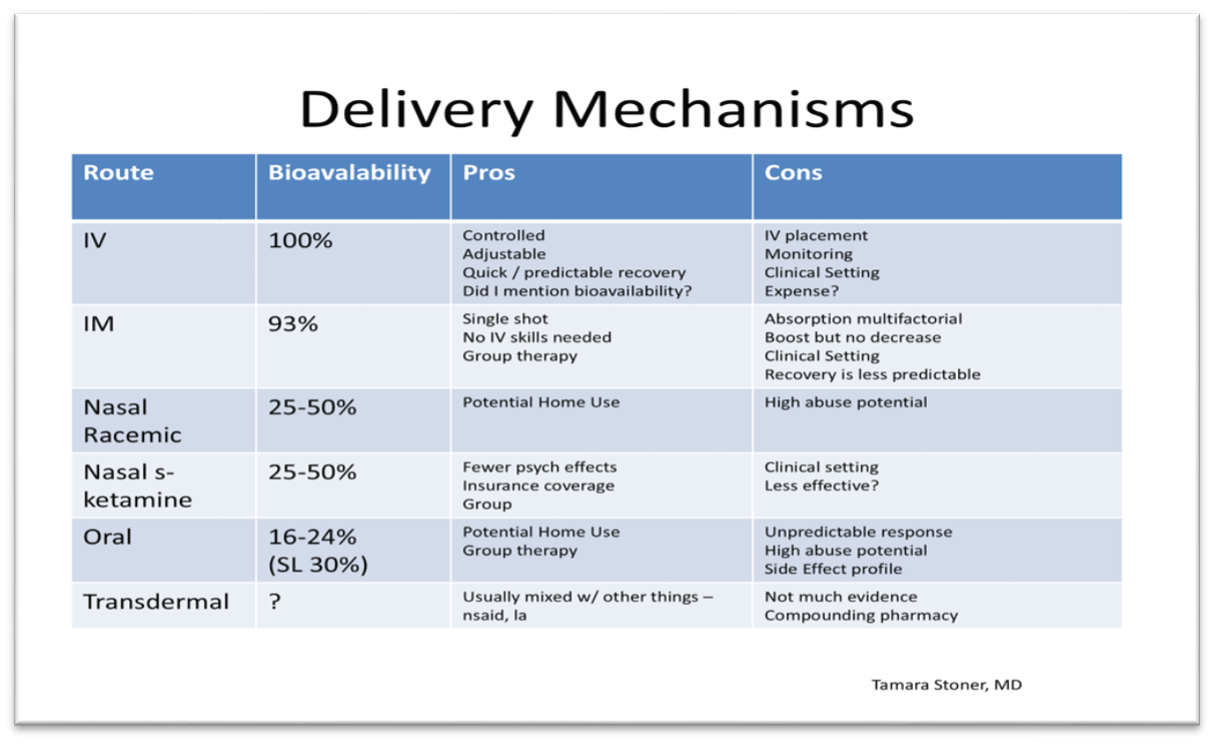
IV therapy is one of the most common and safest methods. The medication is delivered intravenously (directly into a vein) in a clinic with a medical provider present monitoring your vitals.
Another method is intramuscular injections, where the ketamine treatment is delivered into the muscle—usually the shoulder or thigh. This treatment also takes place in a medical clinic under the supervision of a licensed medical provider. While the onset of the medication can still be quick, the downside of this treatment is the dosing is less flexible or precise compared to IV.
Sublingual ketamine, also known as troches, can also be used in a clinical setting. A tablet is placed under the tongue or between the cheek to dissolve and absorb into the body. This method tends to be more affordable and non-invasive, but does come with some disadvantages. Sublingual tablets have a slower onset and only part of the dose gets to the brain, which requires taking a higher dosage of ketamine to get the same effect as IV. Depending on the dosage and absorption, it can be less effective or too potent.
Finally, nasal ketamine, either s-ketamine (Spravato) or racemic (think regular ketamine as a spray) is an option for some people. In this form, ketamine is given by a metered nasal spray. Spravato is the FDA approved option for treatment refractory depression. It must be administered by a medical provider in a clinical setting, and the patient must be monitored for 2 hours. Spravato is very expensive and is less effective than IV ketamine, but is sometimes covered by insurance.
In medicine, when we talk about different methods of administration of any drug, we think in terms of “bioavailability” – what proportion of the drug that’s administered enters the circulation and gets to the site where it has an active effect. For example, ketamine’s oral bioavailability is about 20%, which means that 1/5 of the dose a person takes makes it to the brain. The remainder simply doesn’t get absorbed or causes side effects like bladder and liver problems without benefit. The table below provides a summary of bioavailability, pros, and cons of the different delivery methods.
Risks of At-Home Ketamine
Like any drug, ketamine has potential for abuse. The FDA warns that overuse can cause:
- Dissociation and sedation
- Slowed breathing
- Abuse and misuse
- High blood pressure and alterations in heart rate
- Damage to the bladder and urinary track
Online ketamine clinics offer quick access to ketamine treatments that are delivered right to your front door, allowing you to bypass the clinic altogether. Usually, it is provided as troches for oral use, but one company is now offering prefilled syringes for intramuscular or subcutaneous use. There is a high risk of taking the medication on your own without medical monitoring. When you are dosing at home, you don’t have a physician who is monitoring your vitals, adjusting your dosage, or supporting your mental health as you proceed through the treatment. This leaves the medication management to the patient and non-medical guides or counselors, which can lead to taking too little, too much, or too frequently or taking medication in an unsafe manner or setting. Administration by these methods is often unpredictable. Ketamine can become addictive and have significant negative health effects, especially if taken at high doses. In a clinical setting, a physician provides an appropriate dose that is enough to treat mental health conditions while also ensuring safety.
A tragic example of misuse is the death of actor Matthew Perry. His toxicology report states that he had ketamine in his system at the time of his death, and it appears that he self-dosed ketamine at home. Reports say he was in the hot tub with a very slow heart rate during this time. This tragic event is one that could have been avoided in a clinical setting. When taken at home, patients may engage in activities such as taking a shower or using a hot tub, which can further lower their heart rate, leaving them at a higher risk.
Another public figure who has been very vocal about their ketamine treatment, in and out of the clinic, is Elon Musk. He has stated that there was a point in his life when he took ketamine at least once a day to help him get out of a “depressive state.” However, he has also mentioned that frequent dosing began to affect his bladder. Regular use at that level can come with potential risks, including addiction and bladder complications.
The American Journal of Psychiatry reported a case of an overdose with at-home oral use. A patient who suffered from post-traumatic stress disorder self-administered a dose of ketamine sublingual tablets following instructions given by a telehealth counselor. The dosage was approximately 40x the recommended IV dose—resulting in blood levels that exceeded the average dose for general anesthesia. The patient was found unresponsive shortly after taking these tablets, and was sent to the emergency room for care and recovery.
In-Clinic Ketamine Treatments
The American Society of Anesthesiologists published a guide on the safe use of ketamine. The guide explicitly states that intravenous and intramuscular ketamine should only be administered by a licensed provider in a monitored setting—and that doses should be appropriate for the patient. It is strongly recommended that ketamine providers, for any form of ketamine, should have regular in-person meetings with patients for thorough monitoring.
When you receive ketamine in a clinic, your physician can ensure you are receiving the proper dosage for your specific needs. You will also be in a safe and calming environment, ensuring you receive the most out of your treatment. At our clinic, we take on a “set” and “setting” approach to ketamine therapy.
Set: refers to the mindset you bring into the session. It includes your mood, intentions, and expectations for the treatment.
Setting: is what the physician can offer; a calm, safe, and comfortable environment for you to fully take on the benefits of the treatment.
Learn more about “set” and “setting” in our blog.
Bottom Line
Ketamine therapy is a powerful treatment, but like many medications, its effectiveness depends on how it is taken. While at-home treatments are convenient, they come with significant safety risks.
If you are considering ketamine therapy or have additional questions, contact our clinic today. We are here to provide you with a safe and comfortable environment for us to work together to improve your mental health.
References
- StriveMD Wellness. (n.d.). Matthew Perry and Ketamine Use: A Deep Dive into Celebrity Influence and Mental Health Treatments. Retrieved from https://www.strivemdwellness.com/post/matthew-perry-and-ketamine-use-a-deep-dive-into-celebrity-influence-and-mental-health-treatments
- U.S. Food & Drug Administration (FDA). (2023, October 10). FDA warns patients and health care providers about potential risks associated with compounded ketamine. Retrieved from https://www.fda.gov/drugs/human-drug-compounding/fda-warns-patients-and-health-care-providers-about-potential-risks-associated-compounded-ketamine
- Satori Integrative Medicine Clinic. (2020, June). Set and Setting: Patient/Practitioner Partnership in the Therapeutic Ketamine Experience. Retrieved from https://glenwoodspringsketamine.com/2020/06/set-and-setting-patient-practitioner-partnership-in-the-therapeutic-ketamine-experience/
- Satori Integrative Medicine Clinic. (2025, June). How Ketamine Treatment Works. Retrieved from https://glenwoodspringsketamine.com/2025/06/how-ketamine-treatment-works/
- Johnson, B. E., Borges, E. S., Gaspari, R. J., Galletta, G. M., & Lai, J. T. (2024). Unintentional Ketamine Overdose Via Telehealth. American Journal of Psychiatry, 181(1), 81–82. Retrieved from https://psychiatryonline.org/doi/10.1176/appi.ajp.20230484
- American Society of Anesthesiologists. (2025, February 7). Guidance on the safe use of ketamine outside of acute pain management and procedural sedation. Retrieved from https://www.asahq.org/advocating-for-you/guidance/ketamine-safe-use
Recent Comments